Dunwoody's "Swim/Tennis Neighborhood" Label Doesn't Mean What Most Buyers Think
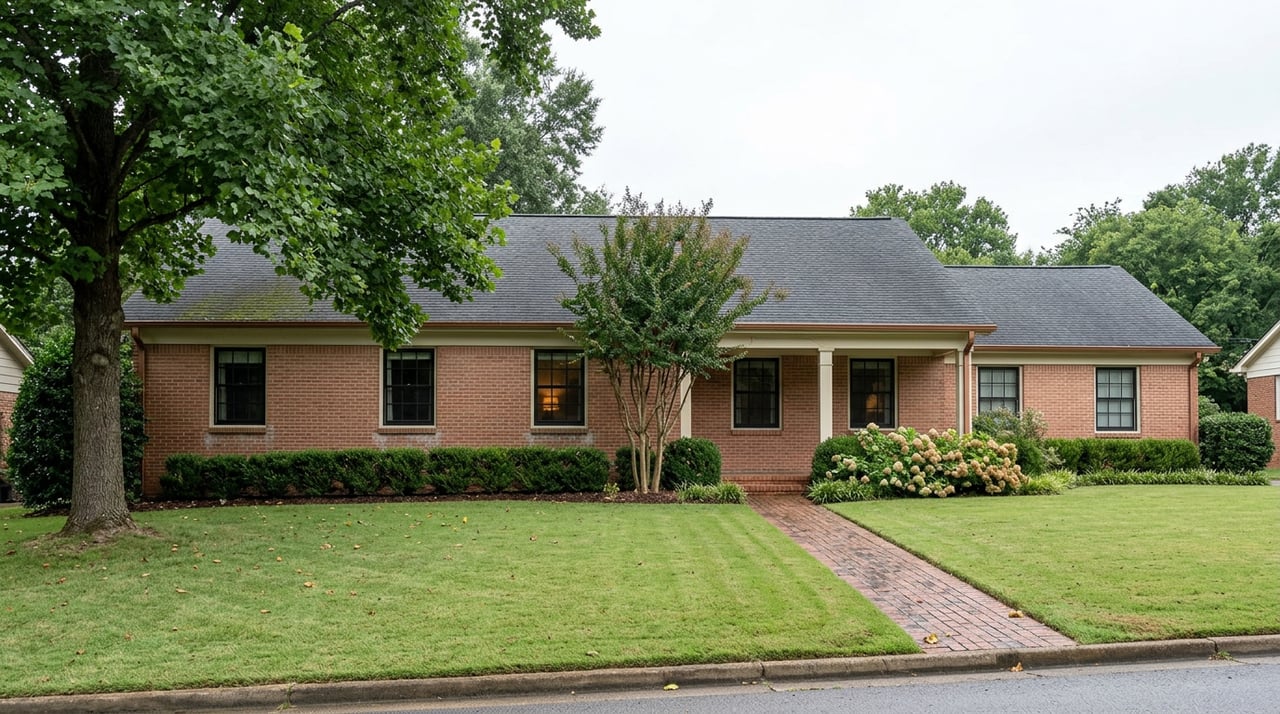
A buyer touring homes in Dunwoody this fall will see the same phrase again and again: swim/tennis neighborhood. It shows up in Redfield listings, Village Mill listings, Wynterhall listings, all promising an amenity that sounds bundled with the mailbox. Most buyers assume that if the listing says it, the pool and the courts come with the house the same way the driveway does.
They don't. At almost every club in Dunwoody, membership is a separate transaction with its own application, its own fee schedule, and its own rules about who gets in and when. The listing describes a neighborhood's proximity to a club. It says nothing about whether that club is open, full, or restricted to people who already live there. That gap between the marketing language and the actual membership rulebook is the thing worth understanding before you decide a swim/tennis address is worth a premium.
Under Georgia law, when you buy into a subdivision with a homeowners association, membership in that HOA is automatic and so are the dues. That part is straightforward. But the recreation club, the pool and the tennis courts that give a Dunwoody neighborhood its swim/tennis reputation, is usually a different organization entirely, with its own board, its own bank account, and its own decision about who can join.
That distinction matters because it means two things can be true at once: your home can sit inside the boundaries of, say, Wynterhall, and you can still need to fill out a membership application, pay an initiation fee, and wait to hear back before your kids ever set foot in that pool.
Ask five different Dunwoody clubs how membership works and you'll get five different answers. Here's what each one currently publishes about who's eligible:
| Club | Neighborhoods it serves | Stated eligibility |
|---|---|---|
| Kingsley Racquet & Swim Club | Kingsley | Open to new members from anywhere around Dunwoody |
| Vermack Swim & Tennis | Vermack area | Open to all area residents |
| Wynterhall Swim and Tennis Club | Wynterhall, Wyntercreek, Dunwoody Knoll | Open to everyone in the Dunwoody area, with priority to those three subdivisions |
| Georgetown Recreation Club | Georgetown | Describes itself only as member's only, without publishing broader eligibility |
| Village Mill Swim & Tennis Club | Village Mill | Residents are offered membership, per the club's own materials |
| The Branches Swim & Tennis Club | Hidden Branches area | Prospective members apply online or visit the clubhouse |
Three of these clubs, Kingsley, Vermack, and Wynterhall, explicitly tell you membership isn't locked to a specific subdivision. Georgetown Rec tells you almost nothing about who qualifies, which means the only way to find out is to ask directly. That inconsistency alone is reason enough not to treat "swim/tennis neighborhood" as a single, predictable product across Dunwoody.
The variation isn't an accident. It's the residue of how these clubs were built in the first place.
The Dunwoody North Civic Association's own history of its Driving Club lays out the original arrangement plainly. Developer Tom Cousins donated the land for the club to the residents of Dunwoody North on the condition that it would be used exclusively for the residents of Dunwoody North Subdivision, a restriction designed so his development could advertise pool and tennis access while competing subdivisions nearby could not. The exclusivity was a sales tool, not a neighborhood preference.
That restriction held only until residents paid off the note on the land, the pool, and the courts. Once the debt cleared in the mid-1980s, and once the original members' children had grown and stopped using the pool, the club needed new revenue to survive. Membership opened first to adjacent subdivisions, then to sponsored outside members, and eventually to anyone who wanted to join. The club even got its name by accident, when a resident named Barbara Keel had to supply something on the spot for a county filing and the label stuck.
That pattern, exclusivity as a developer's marketing edge, followed by a gradual opening once the original financing was retired and membership aged out, is the mechanism behind most of Dunwoody's swim/tennis clubs today. The "neighborhood" branding survives from an era when access really was tied to your address. The access itself mostly isn't anymore.
At Kingsley, the club's current fee structure, dated January 1, 2026, sets family annual dues at $795, due by April 1, with a $100 late fee after that date. That's a real, recurring cost that exists entirely outside your mortgage payment or your subdivision's HOA dues.
Initiation fees move around more. In a 2024 spring promotion, Kingsley discounted its standard $1,500 initiation fee to $1,350 for new families joining that month, and offered a steeper discount to households 62 and older. Numbers like that shift by board decision from year to year, which is exactly why relying on a listing sheet, or even last year's blog post, to estimate your true cost of entry is a mistake.
There's a timing wrinkle too. If you close on a home in Dunwoody in October, you may still owe that club's current membership-year dues before the April 1 renewal, or you may be joining right as a new fee schedule takes effect. None of that shows up in the listing description. It only shows up when you call the club.
Every one of those answers comes from the club or the HOA directly. None of them comes from the MLS.
Homes in Dunwoody's established swim/tennis neighborhoods do carry a reputation, mature trees, walkable streets, a built-in social calendar of pool parties and tennis leagues. That reputation is real and it's part of what buyers are paying for when they choose Redfield over a comparable home a mile away with no club nearby.
What that premium does not guarantee, in most cases, is a membership card waiting at closing. The pool is a separate purchase, made from a separate organization, under a rulebook that Kingsley, Wynterhall, Georgetown, and Village Mill each write for themselves. Comparing two swim/tennis listings on price alone, without checking what each club actually requires, means comparing two different products as if they were one.
Does buying a home in a swim/tennis subdivision guarantee my family a membership? Not automatically. Most clubs require a separate application and fee, and eligibility rules differ by club, from open to anyone in the Dunwoody area to member's-only with limited public detail on how to qualify.
Are club dues collected as part of my mortgage or HOA payment? Generally no. Recreation club dues and initiation fees are billed directly by the club, separate from any mandatory subdivision HOA assessment.
Can I find out a club's current fees before I make an offer? Yes. Most clubs publish a fee schedule on their own site or will answer directly by phone or email, which is the only reliable way to know what you'd actually be paying before you write an offer.
If you're comparing Dunwoody neighborhoods and want a clearer read on what a specific swim/tennis address actually includes before you make an offer, The LaMon Team is glad to walk through it with you. Let's Connect.
Get assistance in determining current property value, crafting a competitive offer, writing and negotiating a contract, and much more. Contact us today.